
How to source good matcha (and spot the bad stuff)
September 4, 2026 · 6 min read · by Cloud Cafe
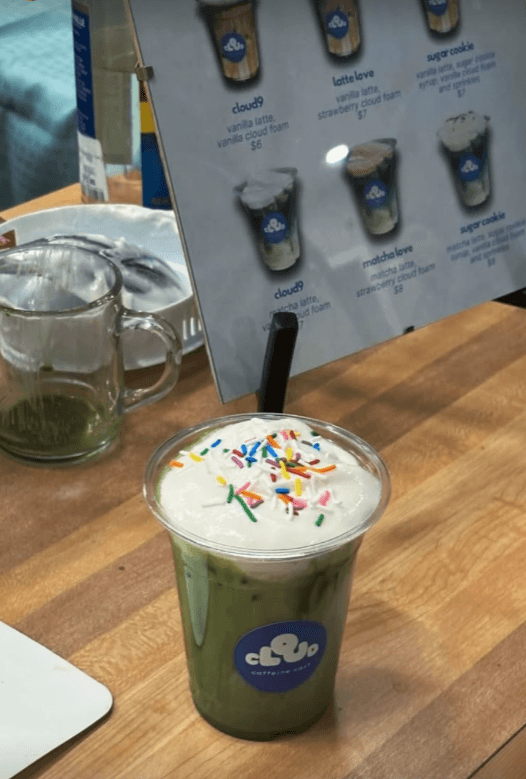
Not all green powder is matcha, and not all matcha is worth drinking. Everything we serve at the cart is ceremonial-grade and stone-ground, and once you know what to look for, you'll never go back to the dull stuff. Here's exactly how we source ours, and how you can do the same.
Start with colour
Great matcha is a vivid, almost electric spring green. That colour comes from chlorophyll and L-theanine, which develop when tea plants are shade-grown for several weeks before harvest. If the powder looks olive, khaki, or yellowish, it was likely sun-grown, harvested late, or has oxidized on a shelf, and it will taste flat and bitter.
Know your grades
- Ceremonial grade: first-harvest leaves, stone-ground, smooth and naturally sweet. This is what you drink whisked with water, and it's the only grade we use at the cart.
- Premium / latte grade: a solid middle ground that holds its own against milk. Good everyday choice for lattes.
- Culinary grade: more robust and bitter by design. Great for baking, ice cream, and smoothies; not great whisked straight.
Check the origin
Japan is the benchmark. Look for matcha from Uji (Kyoto), Nishio (Aichi), Yame (Fukuoka), or Kagoshima, regions with centuries of tencha cultivation and strict processing standards. A trustworthy brand will name its region and often its farm; vague labels like “green tea powder, product of multiple origins” are a red flag.
Read the label like a pro
- Ingredients should say one thing: matcha (or green tea). No sugar, no fillers, no “matcha blend.”
- A harvest or production date: matcha is best within 6–12 months
- Airtight, opaque packaging: light and oxygen are matcha's enemies
- Price sanity check: genuine ceremonial matcha rarely comes cheap; suspiciously low prices usually mean culinary grade in a fancy tin
Storing it right
Once opened, keep matcha in an airtight container away from light, heat, and strong odours. The fridge works well if the container is truly sealed; condensation is the killer. Buy small amounts more often rather than a giant bag once a year; fresh matcha is simply a different drink.
Or take home the matcha we already sourced
If you'd rather skip the homework: we sell bags of the same ceremonial-grade matcha we whisk at Halifax events. It's the exact powder behind our strawberry cloud matcha and vanilla cloud matcha: shade-grown, stone-ground, first harvest. Grab a bag at any event we're pouring at, or reach out through our contact form or Instagram to arrange a pickup in the HRM.
Frequently asked questions
What's the difference between ceremonial and culinary matcha?
Ceremonial grade uses the youngest first-harvest leaves and is smooth enough to drink whisked with just water. Culinary grade uses later harvests, tastes stronger and more bitter, and is meant for baking and blending.
How can I tell if matcha is fresh?
Colour and smell. Fresh matcha is vibrant green and smells sweet and grassy, almost like nori. Dull colour and a stale, hay-like smell mean it has oxidized.
Where can I buy good matcha in Halifax?
Cloud Cafe sells bags of the ceremonial-grade matcha we serve at our cart. Find us at an event, or contact us via cloudcafehfx@gmail.com or Instagram to arrange a pickup anywhere in the HRM.
How long does matcha last once opened?
For peak flavour, finish an opened bag within 1–2 months. Sealed and stored cool and dark, matcha keeps its character for 6–12 months from production.
bring the cloud to your event
Cloud Cafe is Halifax’s mobile matcha & espresso cart. Ceremonial matcha, cloud foam, and a barista crew, anywhere in the HRM.
book the cart